
Lessengers
Revolutionary Technologyfor Next-Gen Data Center,High-Performance andSupercomputing Infrastructure
Lessengers is an innovative optical-interconnect solutions provider, offering a unique solution for simple, high performance, and highly integrated optical connections using polymer wires for optical waveguides in 3D space.
Our Vision
Delivering Innovative Optical Interconnect Total Solutions with Lessengers High Performance Technology Suitable for High-Volume Manufacturing
Unique Technology
A lens-free optical architecture using 3D polymer wiring for simpler, more efficient interconnects
Architectural Innovation
An architecture-level shift enabling dense, highly integrated optical and electrical interfaces
Human-Centered Design
Future-ready technology built around people — enhancing performance without increasing complexity
Our Technology
Innovative Solutions Provider
The direct optical wiring (DOW) technology for optical interconnects has a mechanism that is very similar to the one used for metal wire bonding in electronic devices – needing neither optics nor chemical reactions.
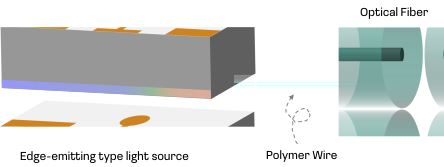
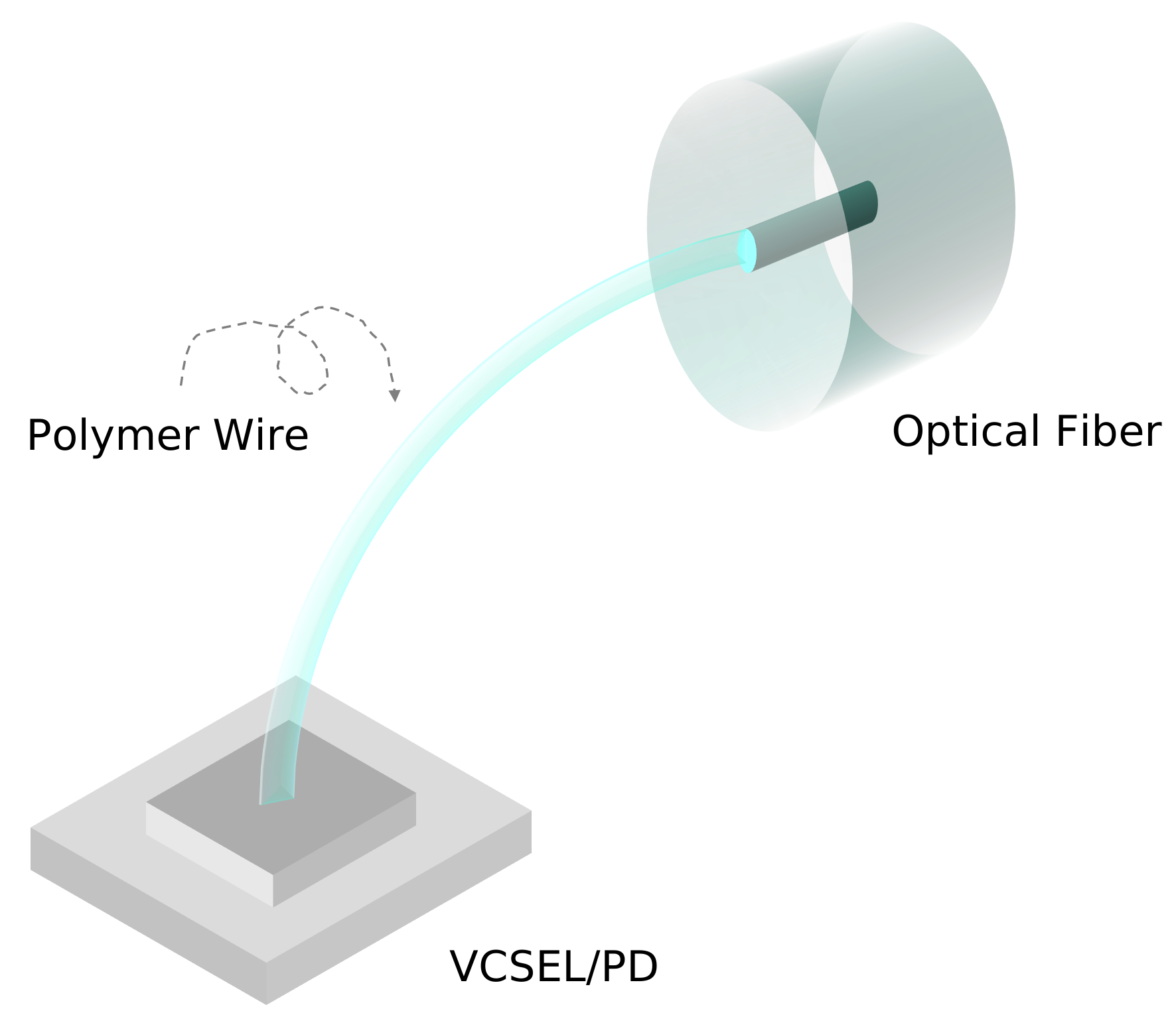
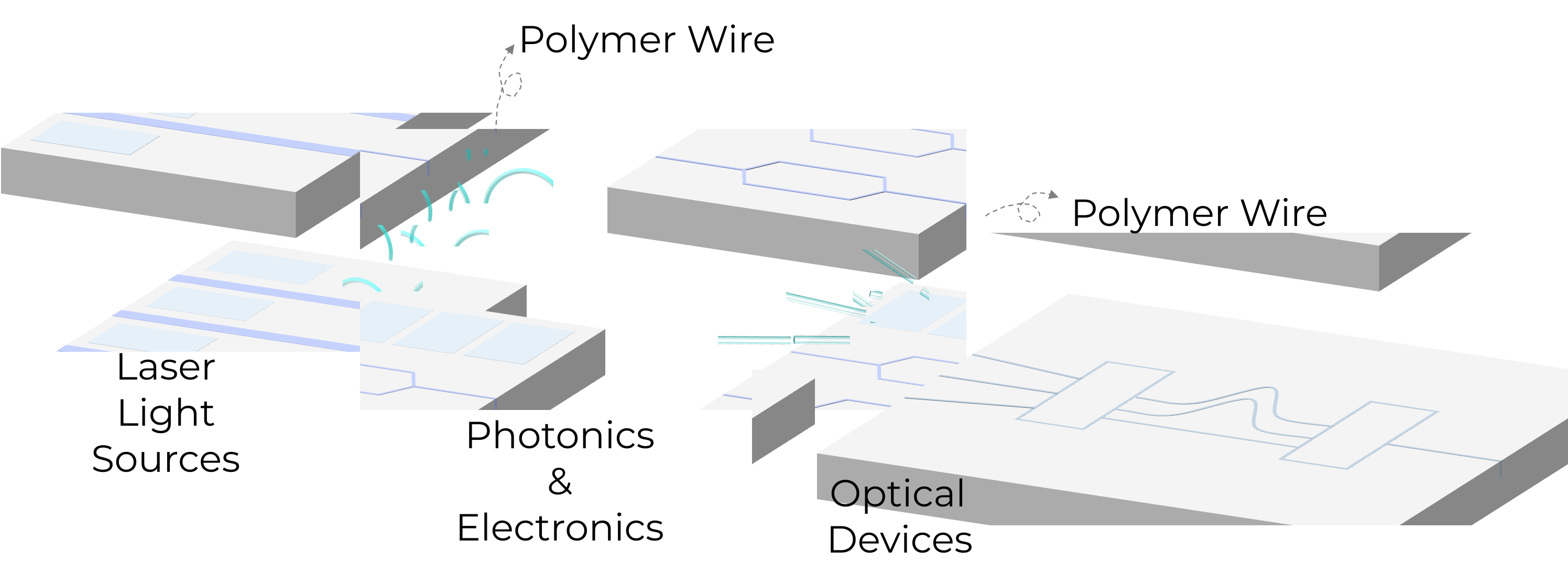
Direct Optical Wiring vs. Conventional Optics
Every transceiver Lessengers make is built on a single patented innovation that eliminates an entire category of manufacturing complexity.
Performance and Efficiency
Power Consumption (W)
Energy Per Bit (pJ/bit)
Cost Efficiency /
Performance (Units)
FRO Full-Retimed Optics / LRO Linear Receiver Optics / LPO Linear Pluggable Optics
Built for the AI Data Center Stack
From pluggable transceivers to co-packaged optics, DOW scales across every layer of the modern hyperscale network.
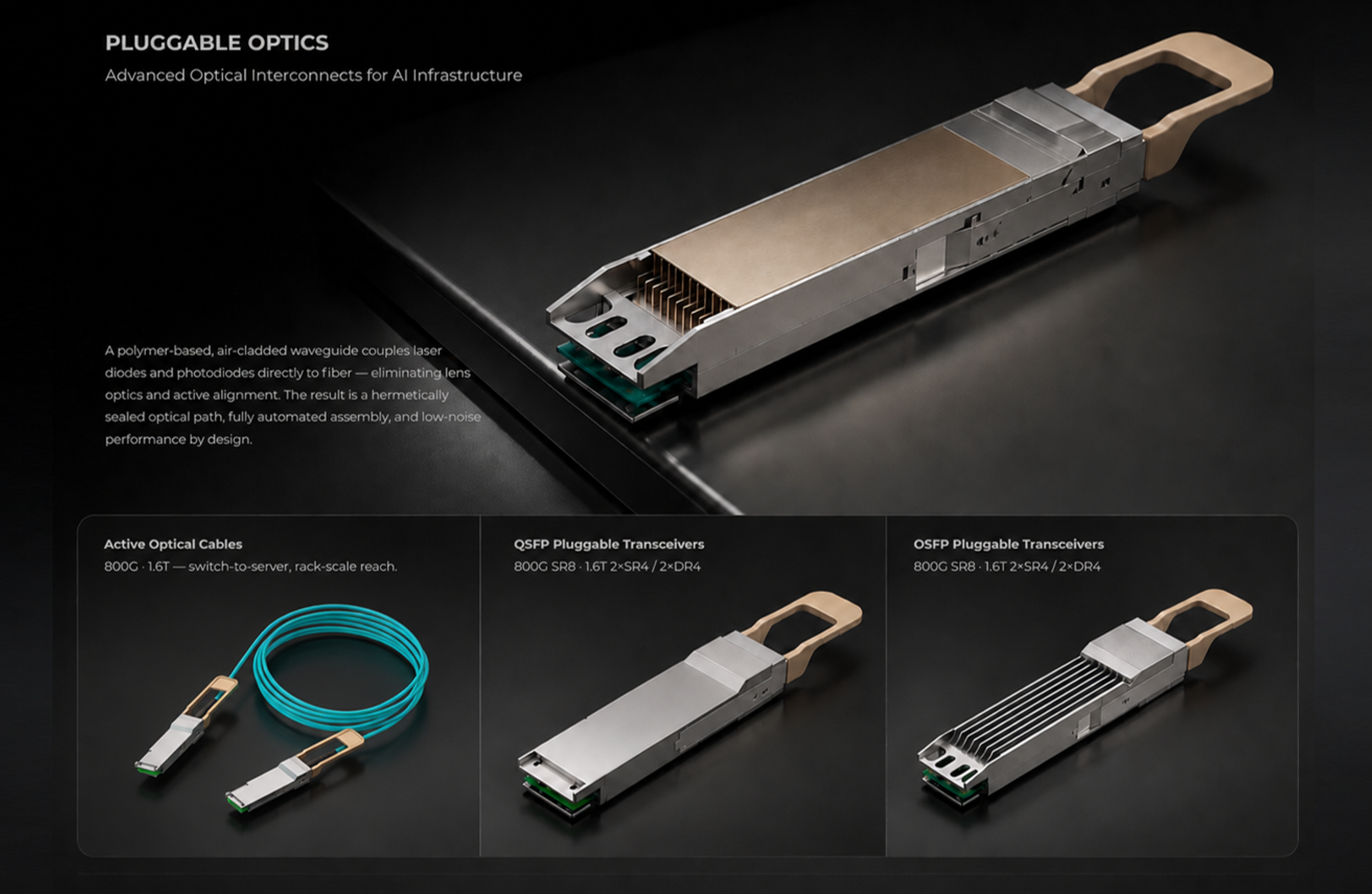
800G & 1.6T OSFP Transceivers
Lessengers produces the industry's first 1.6T OSFP 2×SR4 multimode transceiver — powered entirely by DOW. With LPO, partially retimed, and fully retimed variants available, the portfolio supports every hyperscaler deployment scenario from AI GPU clusters to scale-out Ethernet fabrics.
"Demand for 800G SR8 transceivers exceeded all expectations in 2023 — more than 3 million units will be shipped in 2024. New designs of pluggable and co-packaged optical engines rely on high-density parallel connectivity, which need new packaging and fiber-coupling methods. Direct optical wiring is a great example of such new approaches.“
Dr. Vladimir Kozlov, CEO — LightCounting Market Research
High-Speed Active Optical Cables
DOW-based AOCs deliver the same signal fidelity and immersion-cooling compatibility in cable form — ideal for short-reach GPU-to-GPU and switch-to-server interconnects inside AI clusters.
"Our partnership with Lessengers leverages their impressive DOW-based optical transceiver modules at the board interface and the direct integration of their NPO technology with our chiplet technology, enabling high-performance optical connectivity.”
Sue Hung Fung, Principal Product Line Manager – Alphawave Semi (A Qualcomm Company)
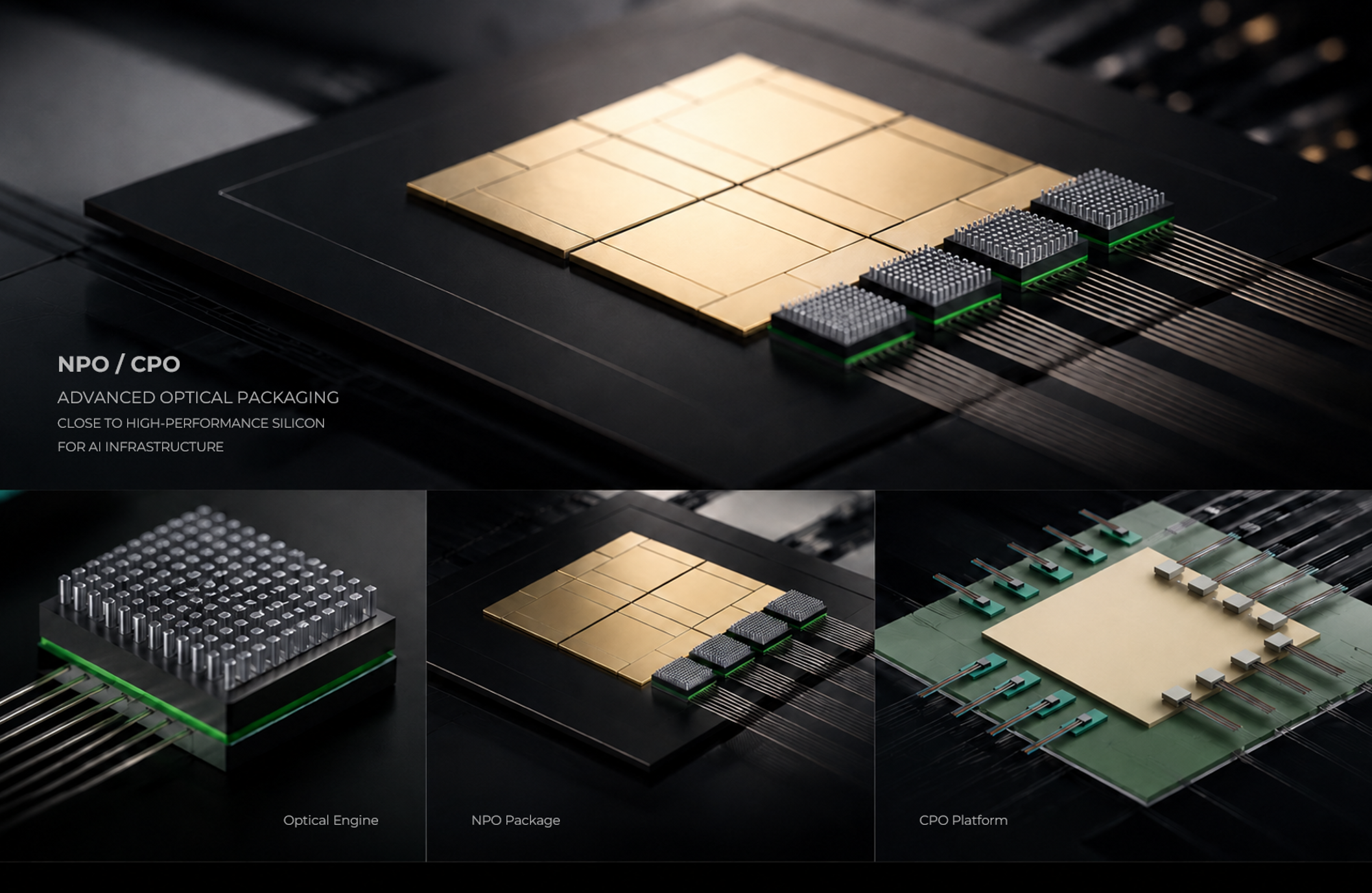
Near-Packaged & Co-Packaged Optics
DOW's ultra-small module profile and high integration capability unlock NPO and CPO configurations — the future of AI ASIC bandwidth. Lessengers demonstrated an industry-first immersion-cooled detachable 800G NPO integrated with AlphaCHIP1600-IO from Alphawave Semi.
"By combining POET's Optical Interposer-based optical engines with Lessengers' innovative Direct Optical Wiring technology, we are developing an efficient path toward 1.6T 2×DR4 transceiver modules that can meet the performance, scalability, and integration requirements of next-generation data center architectures."
Raju Kankipati, Chief Revenue Officer – POET Technologies
The AI Cluster Optics Market Is Accelerating Fast
Optical transceivers are no longer niche components in AI infrastructure. Google has deployed them in AI clusters for over a decade. Nvidia switched from AOCs to transceivers in 2023 – and now ships AI systems fully equipped with optical connectivity. The demand curve is near-vertical.
$12B+
Projected AI cluster optics market by 2029
2023
Year Nvidia switched from AOCs to optical transceivers in AI systems
10 yrs
Google’s track record deploying transceivers in AI cluster infrastructure
10×
More optics per system required by Nvidia GPUs vs. TPUs
1 pJ/bit Is the Target.
Existing Technologies Can't Get There.
Power consumption of optical interconnects is the defining constraint for next-generation AI cluster scaling. The industry must move from today's 10–15 pJ/bit to under 1 pJ/bit — a threshold unreachable with conventional optical coupling.
Chasing the Hard Limit
The objective cannot be reached with existing optical technologies. Novel high-density coupling approached and improved fiber-to-chip alignment architectures are required – exactly the problem DOW was built to solve.
Today (pluggable)
Near-term (LPO/CPO)
Required target
InfiniBand / Ethernet
Copper-dominated today, increasingly optical for longer reach links as cluster scale grows.
NVLink (Nvidia) / ICI (Google)
High-bandwidth chip-to-chip interconnects; optics penetration rising rapidly as bandwidth scales to 10 Tbps.
Connections to off-package memory
The fastest-growing optical opportunity as memory disaggregation reaches the 10 Tbps class, requiring optics to displace copper entirely.
Improved reliability
A co-equal priority alongside power reduction – making immersion-cooling ready, hermetically sealed optics a structural competitive advantage.
Why DOW (Direct Optical Wiring)
Direct Optical Wiring eliminates the air gap and active alignment that drive power loss in conventional technology. The polymer waveguide path enables the low-loss, high-density interconnect architecture essential to the industry.
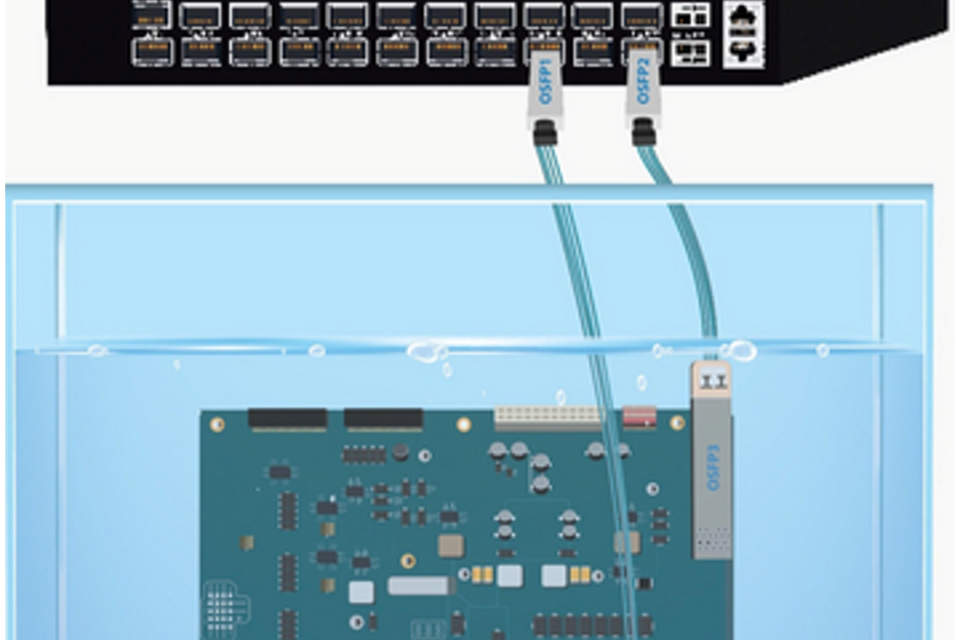
The Data Center Is Going Underwater.
Is Your Optics Ready?
Hyperscalers are abandoning air cooling as GPU rack densities exceed
40-100 kW – well beyond air’s thermal ceiling. Immersion cooling submerges hardware directly in dielectric fluid, delivering up to 50% energy savings and 10× rack density gains.
As AI GPU clusters scale from tens of thousands to hundreds of thousands of accelerators, the thermal load per rack climbs past what any air-based system can handle. Immersion cooling resolves the physics – but it creates a new problem for optical transceivers: dielectric fluid is corrosive to conventional lens assemblies, air gaps, and the adhesives holding them together.
Hyperscalers now deploy immersion systems
To avoid the escalating fan energy of air cooling – Microsoft, Google, and Amazon are all in active pilots and production rollouts.
OCP ratified its first immersion cooling facility guideline
In late 2025, with 20+ vendors pledging compliance – signaling the transition from pilot to standard practice.
Rack power densities exceeding 100 kW
Are now common in AI training clusters, requiring immersion-grade thermal management that air simply cannot provide.
Conventional transceivers require costly retrofitting
Additional sealing, packaging, and assembly steps – to survive immersion fluid exposure.
30% Power Reduction.
23 ºC Cooler. Same Form Factor.
Lessengers’ Low-Power Chip Optimization for the 800G OSFP is not an incremental improvement – it is a structural redesign of where and how heat is generated and released.
Typical Design
800G OSFP
DOW-optimized 800G OSFP
Why this matters for immersion cooling
Lower junction temperatures directly extend component lifespan and reduce thermal stress – both critical in immersion environments where heat cycles are managed by the fluid, not fans. At 72.56 ºC peak vs. the industry baseline of 95.2 ºC, Lessengers’ DOW-optimized design operates with a 22.6 ºC thermal headroom advantage. Combined with 30% lower power draw
(11.2 W vs. 16 W), this enables denser rack configurations, reduced fluid heat load, and longer mean-time-between-failure (“MTBF”) in production hyperscale deployments.